
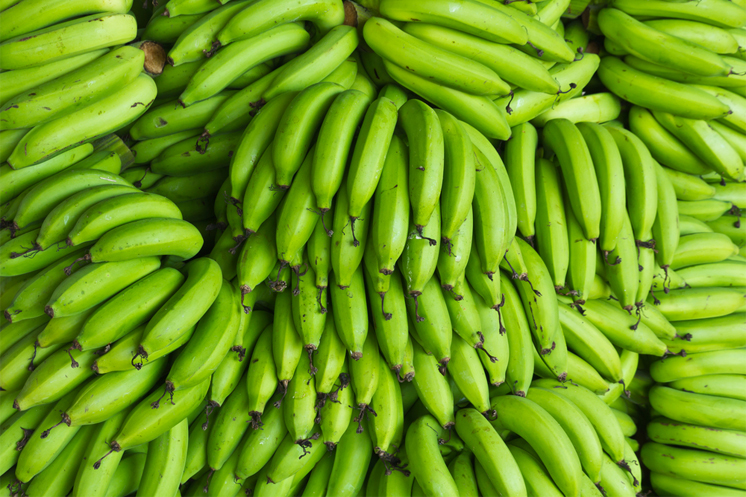
The banana (Musa spp.) is a large herbaceous flowering plant rather than a tree, belonging to the Musaceae family, and is one of the most widely consumed fruits in the world. The edible banana develops from a flower without fertilization (parthenocarpy), which is why cultivated bananas are seedless and propagated vegetatively through suckers or tissue culture. Botanically, the “trunk” is a pseudostem formed by tightly packed leaf sheaths, while the true stem grows underground as a rhizome. Bananas are climacteric fruits, meaning they continue to ripen after harvest due to ethylene production, during which starches convert into simple sugars, softening the fruit and enhancing sweetness.
Nutritionally, bananas are rich in carbohydrates, potassium, vitamin B6, vitamin C, dietary fiber, and bioactive compounds such as dopamine and catechins with antioxidant properties. Economically and ecologically, bananas are significant but vulnerable, as many commercial varieties like the Cavendish are genetically uniform, making them highly susceptible to diseases such as Panama disease, which poses a major challenge to global banana production.