
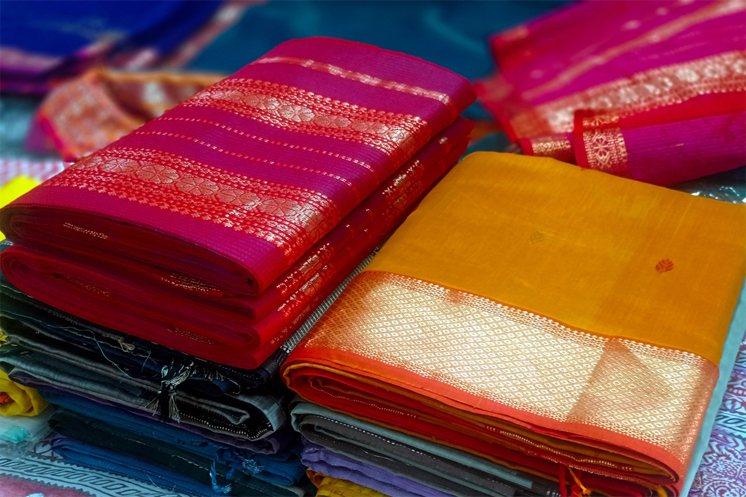
Sarees are one of the oldest and most iconic garments of South Asia, particularly associated with Indian culture, and consist of a long, unstitched piece of fabric draped in various styles that differ by region, climate, and tradition. Typically ranging from five to nine meters in length, sarees are made from diverse materials such as cotton, silk, wool, and synthetic fibers, with weaving and dyeing techniques like handloom, ikat, brocade, and embroidery reflecting rich regional craftsmanship.
Beyond clothing, sarees carry deep social and cultural significance, symbolizing identity, tradition, femininity, and life stages, and are worn during daily life as well as religious ceremonies, weddings, and festivals. Economically, the saree industry supports millions of weavers, artisans, dyers, and traders, while modern innovations blend traditional designs with contemporary fashion, ensuring the saree remains a living heritage that connects history, art, and livelihoods.